
What have we lost?
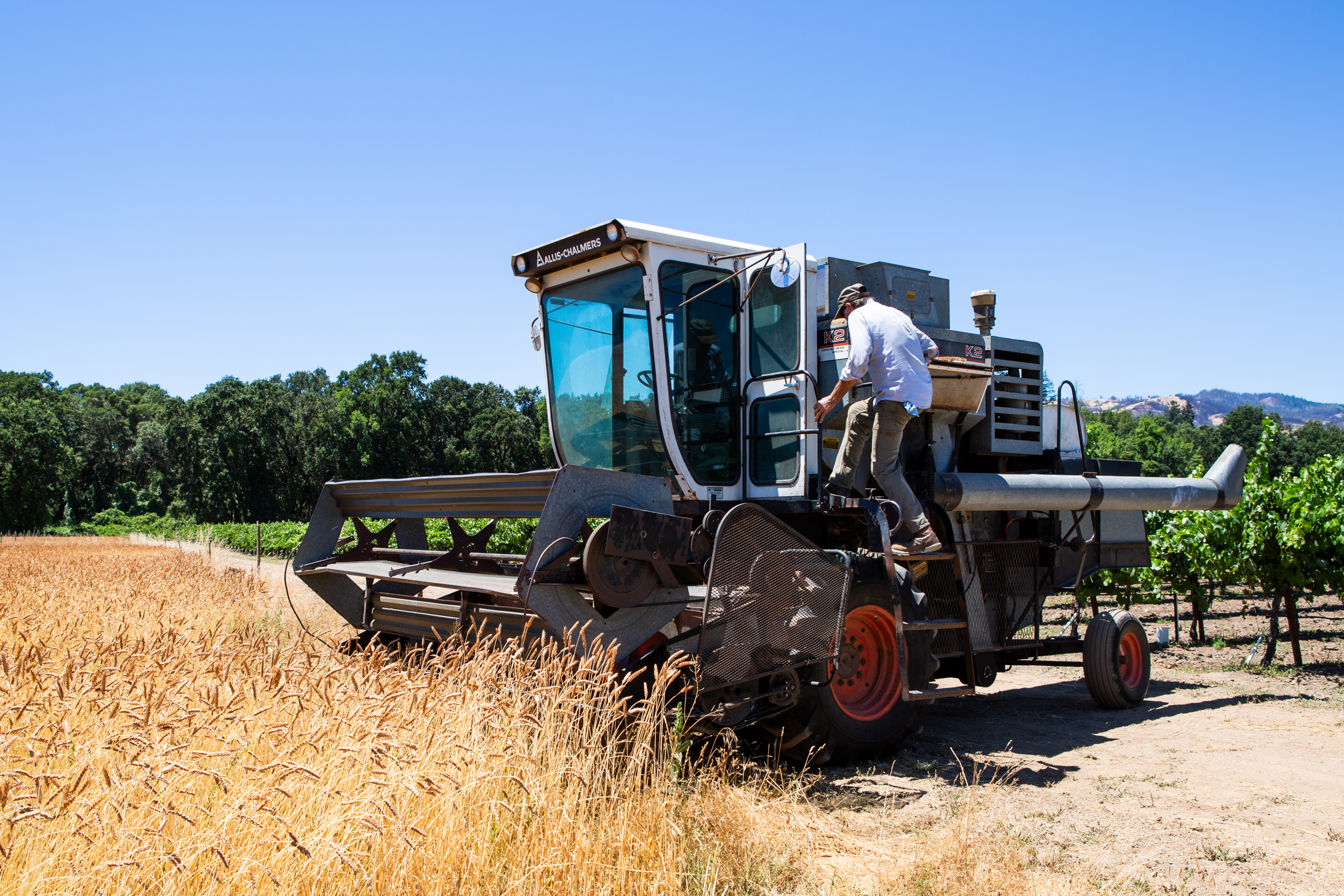 Doug Mosel climbs onto his harvesting equipment in Redwood Valley, Calif., on June 10, 2018. This was the final year Mosel operated the Mendocino Grain Project, a local effort to revive grain farming and strengthen Mendocino County’s food resilience, before selling it to a new owner. (Chris Pugh — Ukiah Daily Journal)
You don’t have to look hard to see what’s been lost. Whole industries that once defined Mendocino County are now gone. The hop fields that gave Hopland its name have vanished. Ukiah’s pear orchards, once a backbone of the local economy, have been torn out or paved over. Off the Mendocino coast, kelp forests have disappeared, collapsing entire ecosystems and wiping out fisheries that once fed families.
These losses are visible. But the deeper losses are harder to measure: the sense of identity tied to meaningful work, the fraying of community bonds, the creeping isolation that grows when we no longer feel connected to place.
That’s the fire Wendell Berry writes about. And it’s still burning.
The World-Ending Fire, a collection of essays by the Kentucky farmer and poet, is not new. The earliest pieces date back to the 1960s. But the book feels urgent, maybe even prophetic.
Berry writes about tobacco, but you can swap in cannabis, grapes, or timber. The story stays the same. A local economy is gutted by an industrial one. People trade usefulness for profit. Then they wonder why nothing feels right.
Berry doesn’t offer easy comfort. He writes plainly and without sentiment. The industrial economy, he says, doesn’t just damage the land. It changes how people relate to it. Land stops being home and becomes a resource—something to extract, shape, and sell.
When that view takes over, work loses its meaning. People stop being neighbors and become competitors. Soil turns to dust. Culture thins. You get Amazon deliveries and DoorDash instead of a feed store or a corner diner. And people wonder why they’re lonely.
In Mendocino County, we’ve lived this. For decades, the lumber industry fed families. It wasn’t perfect. But it was work with a shape and a rhythm, tied to this place. Then it collapsed.
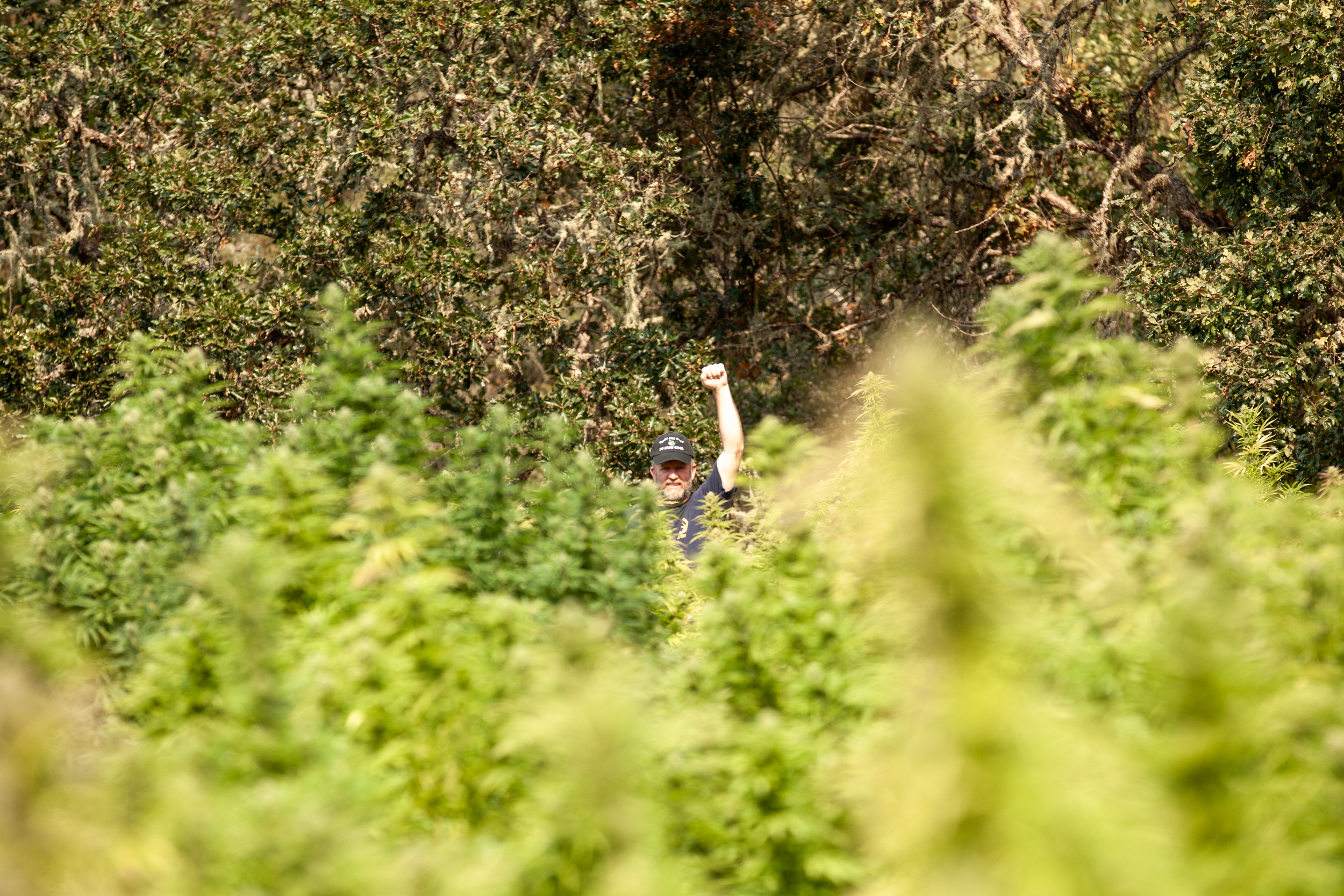 Oaky Joe Munson stands defiantly with a clenched fist at the edge of his cannabis farm at an undisclosed location in Sonoma County on Sept. 13, 2015. A longtime medical marijuana grower and patient advocate, Munson became known across Northern California for providing free cannabis to low-income patients with serious illnesses. (Chris Pugh Photo, 2015)
Grapes moved in, along with weed. For a while, both paid. Now, with cannabis legalized and corporatized, it’s heading the same way. The growers who stayed small, who lived by the seasons and kept the money local, are hanging on by a thread.
Meanwhile, outsiders invest in massive greenhouses that suck power and water and give nothing back. The land becomes something to manipulate—a machine, not a home.
Berry would call this madness. He writes, “The health of the land and the health of the people are not separate.” That’s not just poetic. It’s practical.
When you poison the soil, the body gets sick. When you erase the commons—the places where people meet, trade, argue, and care—the mind and spirit get sick.
We’re seeing both kinds of sickness now. Addictions. Disconnection. Distrust. We blame politics, but it started in the soil.
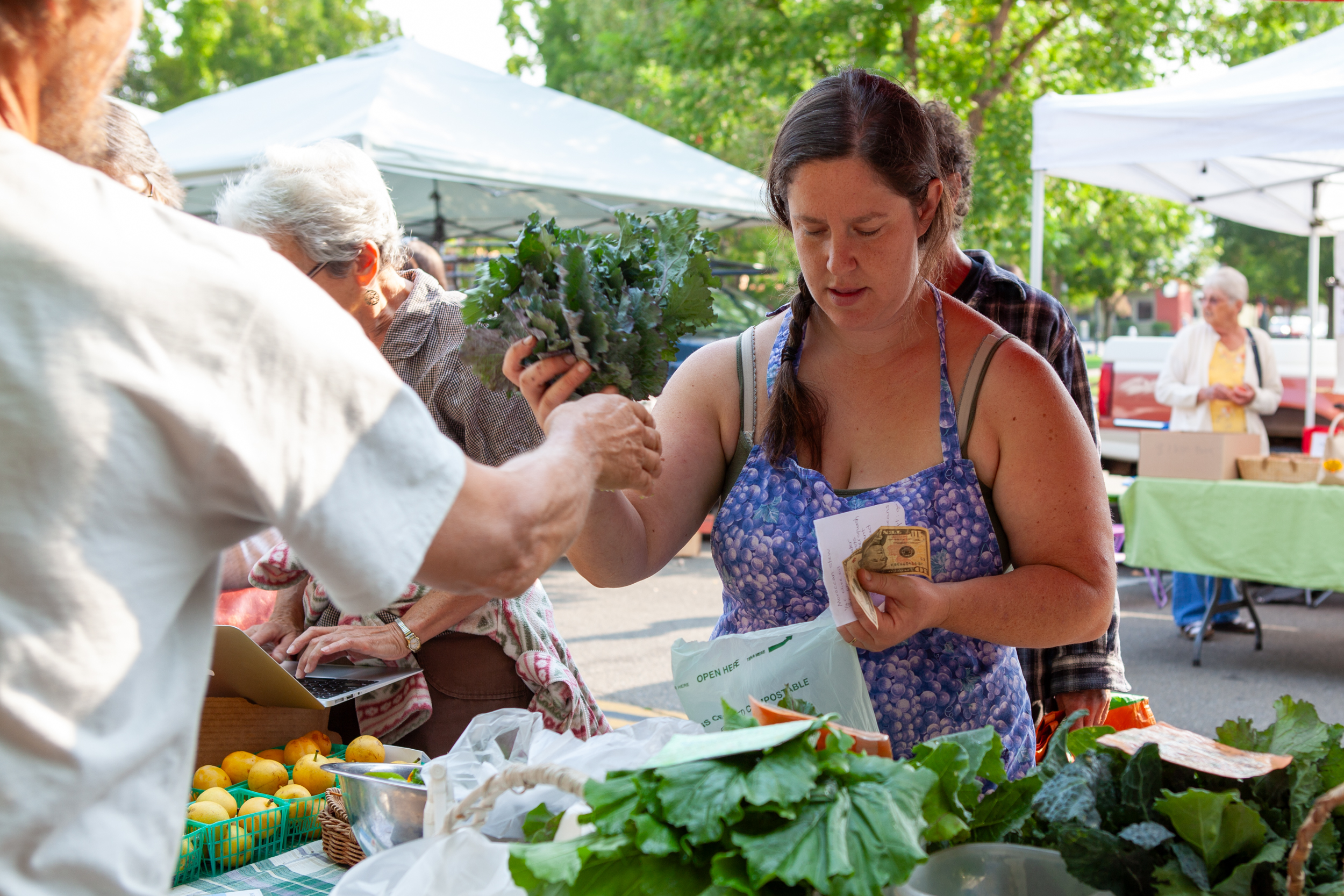 Caroline Radice, co-owner of Black Dog Farm in Potter Valley, selects ingredients for her vegetarian Moroccan curry stew during a cooking demonstration at the Ukiah farmers market on Aug. 8, 2015. Radice, a farmer and chef, is known for her commitment to sustainable agriculture and for co-founding the Good Farm Fund, which supports local food systems in Mendocino County. (Chris Pugh — Ukiah Daily Journal)
There’s a moment in one essay where Berry makes a case for local economies, not as a nostalgic nod to the past, but as a path forward.
He argues for farming as a moral act, one rooted in humility. You work the land. You don’t dominate it. You learn from it. You accept its limits.
That idea—limits—runs through the book. And it might be the most radical part.
Because we’ve been taught to hate limits, growth is often seen as good. More is better. We measure success by scale.
Berry flips that. He argues for what he calls “use value” over “market value.” Not how much something can be sold for, but how it serves a life.
A tomato grown in your yard and eaten fresh. A table built by your neighbor. A conversation that goes past convenience. Those are the things that hold meaning. And they don’t scale.
That’s why the essays in The World-Ending Fire still matter. They don’t preach about saving the planet. They ask us to care for it. To root ourselves in where we are. To live lives that are slower, smaller, and more connected to place and purpose.
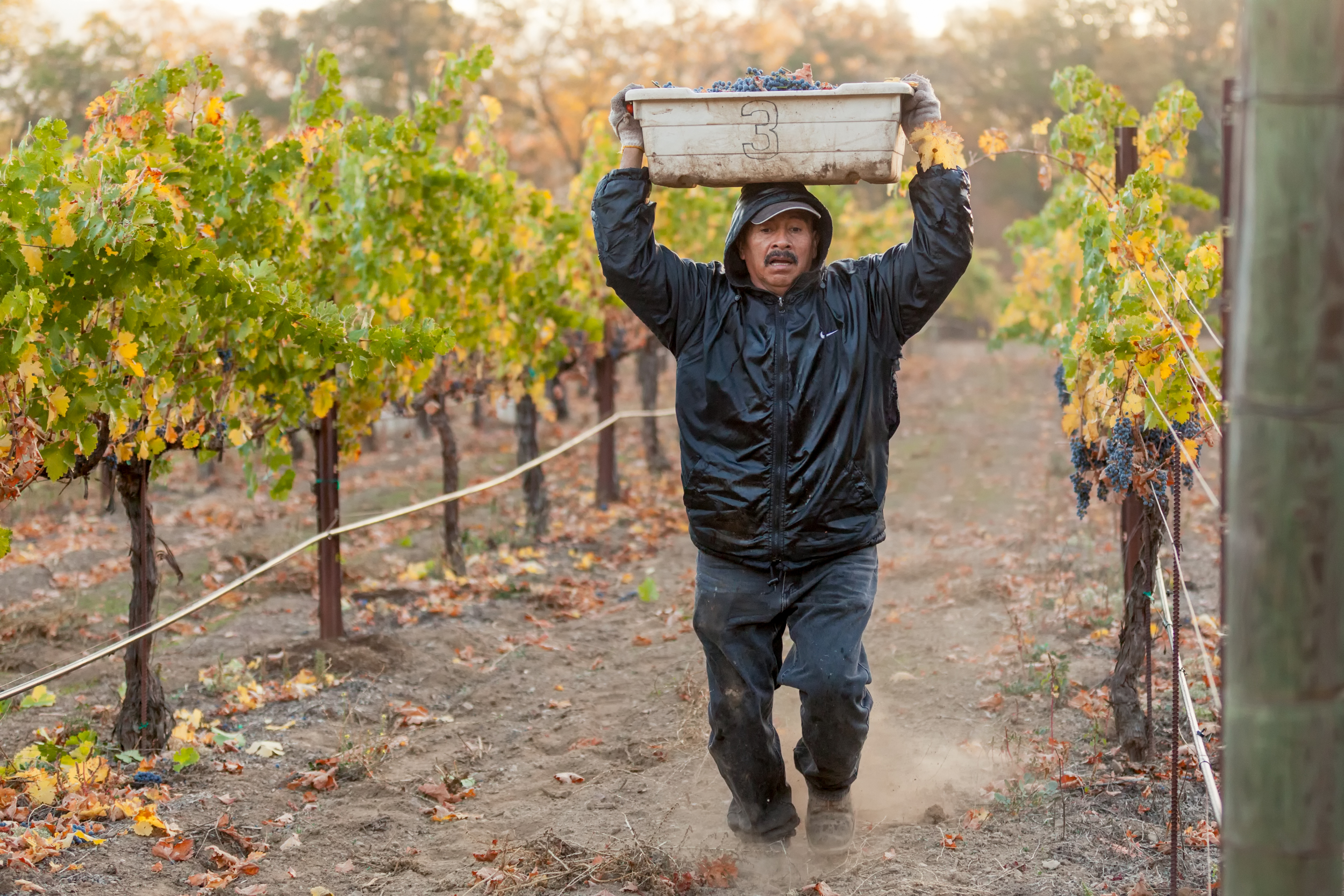 A grape picker runs to deliver a bucket of freshly harvested grapes at Testa Vineyards in Redwood Valley, Calif., on Oct. 30, 2013. The annual grape harvest is a vital part of Mendocino County’s agricultural economy, with vineyards like Testa, which has been family-run for over a century, contributing to the region’s reputation for high-quality wine production. (Chris Pugh Photo, 2013)
That sounds simple, but it isn’t. Especially not here. Mendocino County has been shaped by extraction—first timber, then grapes, then cannabis.
We keep hoping the next thing will save us. Maybe it’s tourism. Maybe it’s tech. But none of those things grow roots. They don’t make neighbors. They don’t make meaning.
Berry says the answers are local. Always. Hope is in the particular.
In the person who learns the names of the plants in their yard. In the farmer who refuses to grow for scale. In the town that protects its watershed. In the family that eats together.
These aren’t big ideas. But they add up. They can rebuild what’s been lost.
He doesn’t offer a plan. Just a lens. And once you see through it, it’s hard to go back. You notice what’s missing. You crave work that matters. You question convenience.
You get angry at the way progress has gutted meaning. And maybe you make changes. Not out of guilt or fear. But because the alternative feels hollow.
That’s what makes Berry’s writing so dangerous. It doesn’t scold. It seduces.
It makes you long for a life with shape and ritual. A life with roots. And it makes the modern world look cheap by comparison.
In Fort Bragg, the old mill site still sits empty. People argue over what to do with it. A hotel? A park? Another promise of economic rebirth?
Berry wouldn’t care much for the branding. He’d ask a harder question.
What do the people need? What will serve this place? What will last?
Those are the right questions. This book won’t answer them. But it will help you ask them better.
Related
- [[Right Where I Am]]
- [[11. Mill Town Explores The Complicated]]